25 Years Later: How Rats Found Their Way Into a Property Through a Redundant Drainage Line
A rat problem that took more than two decades to reveal its route
Sometimes a rat investigation begins with a very simple question:
How are the rats getting into the building?
In this particular case, the answer involved a drainage alteration carried out more than 25 years earlier and a redundant drainage line that had never been correctly sealed.
The rats had not taken 25 years to find the property.
They had simply been given an opportunity to exploit a concealed route that had remained available to them for many years.
Eventually, the right circumstances allowed that route to become significant.
What followed was a specialist investigation involving tracking and CCTV drainage inspection, which ultimately identified the redundant line and provided a straightforward solution.
The Background
The customer had an extension constructed at the rear of the property more than 25 years ago.
For many years, there had been no obvious rat problem within the extension.
Then rat activity began to become apparent.
At first glance, it would have been easy to regard this as a conventional rodent infestation requiring conventional pest control.
However, the location and circumstances raised a more important question:
Why had rats suddenly started appearing within an extension that had been present for more than two decades?
The age of the extension was significant.
The rats had not suddenly become capable of finding the property.
There was a reason why the problem had developed when it did.
The investigation needed to establish what had changed — or, more importantly, what had been there all along.
Following the Rats Back to the Drainage System
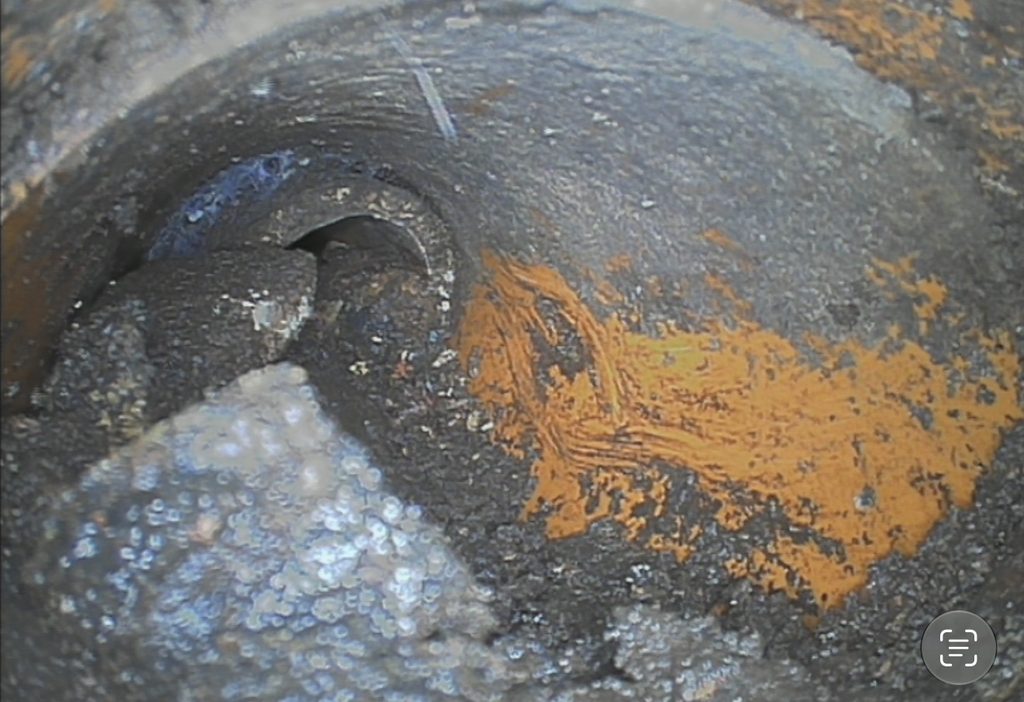
The investigation involved a combination of tracking and CCTV drainage surveying.
Rather than concentrating solely on where the rats had been seen, the investigation considered the possible routes by which they could be moving towards and into the building.
This included examining the relationship between the property, the extension, the external drainage and the surrounding drainage infrastructure.
The investigation identified a connection between the wider drainage network and a more localised drainage line serving the area to the rear of the property.
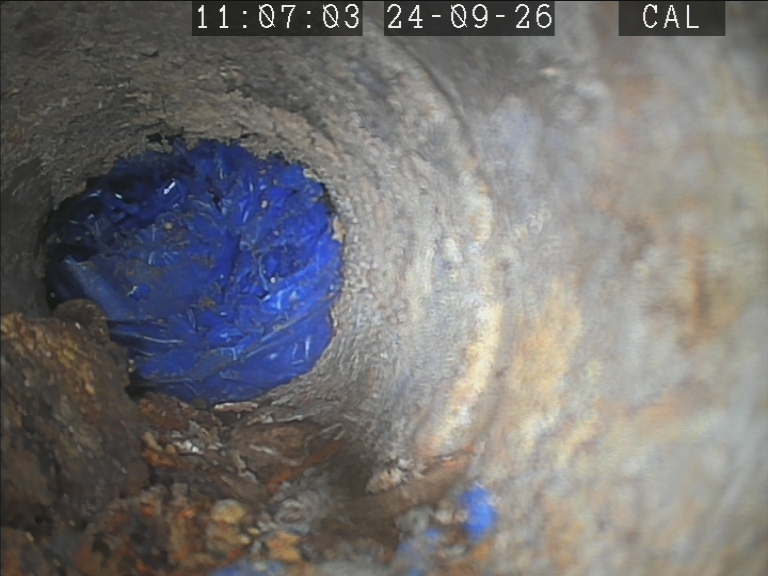
Further investigation established that a redundant drainage line had not been correctly sealed.
This was the critical finding.
The Rats Had Found the Route
The redundant line had effectively created an opportunity for rat movement.
The rats were able to utilise the drainage infrastructure and gain access to the redundant section.
Within these dry lines, the rats were able to shelter and move away from the main flow of the drainage system.
Over time, gnawing activity allowed them to exploit the surrounding materials and gain access to a sub-floor void.
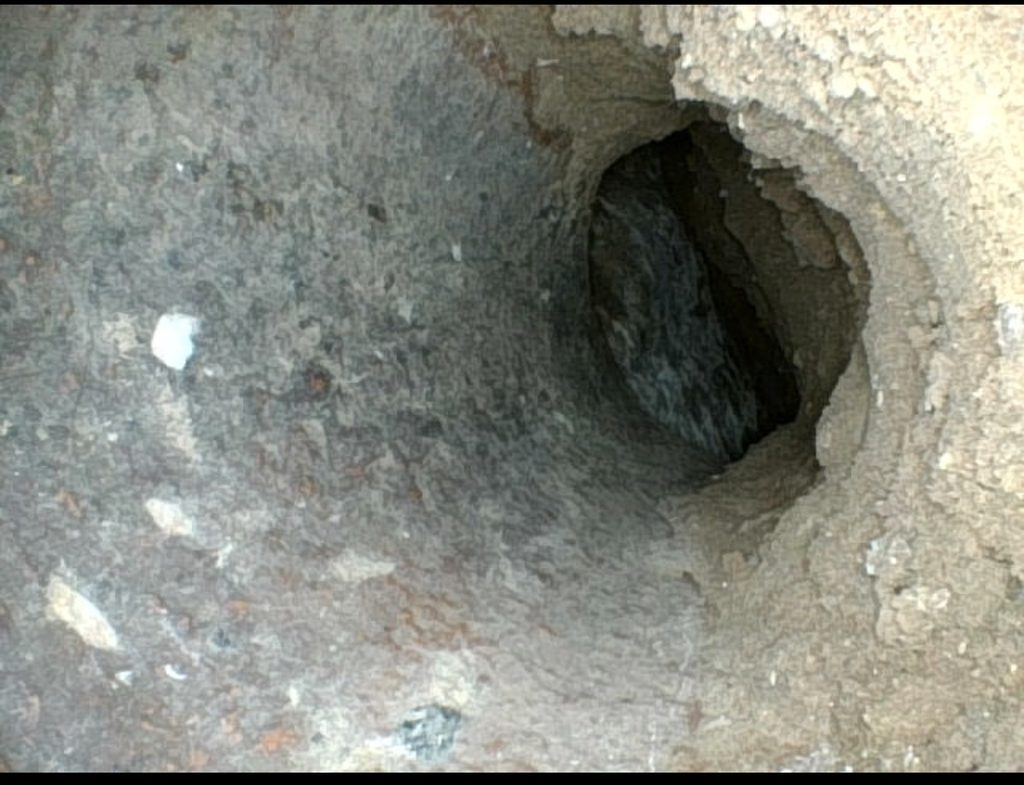
Once inside that concealed void, the problem became much bigger than a single point of entry.
The sub-floor space provided access into the building and created the potential for rat movement throughout the property and into connecting areas and properties.
What initially appeared to be a rat problem within an extension was therefore found to have a much wider structural and drainage relationship.
The 25-Year Delay Wasn’t the Rats Being Slow
This is perhaps the most important lesson from the investigation.
The fact that the extension had been present for more than 25 years did not mean that rats had somehow taken 25 years to discover it.
The drainage arrangement had created a potential access route from the outset.
The issue was that the route had remained available because the redundant drainage line had not been properly sealed.
The rats were simply exploiting an opportunity that existed within the built environment.
This is why the age of a building alteration does not necessarily rule out an historic defect as the cause of a current infestation.
A defect can remain unnoticed for many years before circumstances change sufficiently for rats to exploit it.
Why Investigation Matters
Had the investigation concentrated solely on treating the visible rat activity, the underlying access route could easily have remained undiscovered.
The important question was not simply:
“How do we remove the rats?”
It was:
“How are the rats getting into this part of the property in the first place?”
Tracking helped establish the areas of activity and potential movement.
CCTV drainage surveying then provided the opportunity to examine the drainage infrastructure and investigate the suspected route.
Together, these methods allowed the investigation to move from observation to evidence.
The redundant drainage line was identified as a significant part of the access route.
A Relatively Simple Solution
One of the interesting aspects of this investigation was that the eventual remedial solution did not require a major reconstruction of the drainage system.
Once the redundant line had been identified, it could be effectively closed using an appropriate industry-standard drain bung.
This demonstrates an important principle in pest investigation:
The solution is not always complicated — but finding the cause can be.
Without identifying the redundant line, it would have been difficult to know where the appropriate remedial action should be directed.
The investigation therefore provided the information necessary for a relatively straightforward remedial measure to be considered.
The Public Health Dimension
Rat infestations are not simply a matter of inconvenience or property damage.
There is a long-established public-health framework surrounding the control of rats and other vermin.
The Public Health Act 1936 contains provisions relating to verminous premises and gives local authorities powers to require appropriate steps to remedy verminous conditions, including steps necessary for the destruction or removal of vermin. Section 48 also provides powers concerning the examination and testing of drains believed to be defective. (Legislation.gov.uk)
This is important because a rat infestation can sometimes indicate an underlying condition within the property or its associated infrastructure.
In cases where drainage or structural defects are contributing to rat activity, simply removing the animals does not necessarily address the underlying cause.
Prevention of Damage by Pests Act 1949
The Prevention of Damage by Pests Act 1949 remains particularly relevant to rats and mice.
The Act establishes a statutory framework dealing specifically with rats and mice. It includes duties and powers relating to the reporting, treatment and prevention of infestations, with section 4 providing local authorities with powers to require action where rats or mice are found. The Act also contains provisions allowing local authorities to deal with groups of premises where rats or mice are present in substantial numbers. (Legislation.gov.uk)
This is particularly relevant where rat activity is not confined neatly to one property.
Where rats are able to move through interconnected drainage, sub-floor spaces, external areas or other routes, the source and extent of the problem may need to be considered more widely.
In this case, understanding the route was therefore important not only from a pest-control perspective, but also from a public-health and property-management perspective.
Why CCTV and Tracking Were Important
Neither tracking nor CCTV drainage surveying should be viewed as a replacement for professional judgement.
They are investigative tools.
In this case, they worked together.
Tracking helped investigate where rat activity was occurring and how the animals appeared to be moving through the environment.
CCTV provided the opportunity to investigate the drainage infrastructure and examine the suspected route.
Professional Interpretation
The findings then had to be considered alongside the construction history of the property, the extension, the drainage layout and the observed rat activity.
It was the combination of these factors that allowed the investigation to identify the redundant drainage line as a significant part of the problem.
The Wider Lesson
This case demonstrates why persistent or unusual rat activity deserves proper investigation.
A rat appearing inside an extension may initially look like a straightforward pest-control issue.
But the actual cause may involve:
- Historic building work
- Redundant drainage
- Defective drainage connections
- Sub-floor voids
- Building access points
- Interconnected properties
- External drainage infrastructure
- Concealed movement routes
The fact that a building alteration may be decades old does not mean that it cannot be relevant to a current infestation.
Sometimes the defect has been there all along.
The rats simply haven’t needed to exploit it until now.
Rats In? Find Out How.
At Rattraxs, the objective of a specialist rat investigation is not simply to identify where rats have been seen.
It is to investigate how they are moving, where they are gaining access and what circumstances may be allowing the problem to continue.
Depending on the circumstances, this can involve:
Tracking and monitoring
Specialist tracing
Thermal imaging
Physical inspection
Evidence gathering
In this case, following the evidence led from the reported rat activity to the drainage system, from the drainage system to a redundant line, and from that line to a concealed sub-floor access route.
The eventual remedial action was relatively straightforward.
Finding it was the difficult part.
That is precisely why investigation matters.
Rattraxs Pest Control
Specialist Rat Investigation • Tracking & Tracing • CCTV Drain Surveys • Thermal Imaging • Professional Reporting