
How rats move, enter buildings and behave
Rats are highly adaptable animals. When they establish themselves around a property, their movements are rarely random. They tend to exploit shelter, food, water and established routes, and a building can become part of that network.
For Rattraxs, understanding those movements is important because finding rat activity is only the beginning. The more useful question is often:
How are the rats getting there, and what is allowing them to continue using the property?
How rats move
Rats generally prefer to move through areas that provide some degree of cover and protection. Around buildings this may include:
- Edges of buildings and walls
- Vegetation and overgrown areas
- Fences, boundaries and sheltered passageways
- Voids beneath decking and structures
- Drainage systems
- Culverts and other concealed routes
- Loft, floor and wall voids
- Gaps beneath doors and around structures
Their movements can change according to food availability, disturbance, weather, breeding activity and changes to their environment.
A rat seen in one location does not necessarily mean that is where it is living.
It may simply be a point along an established route.
How rats enter buildings
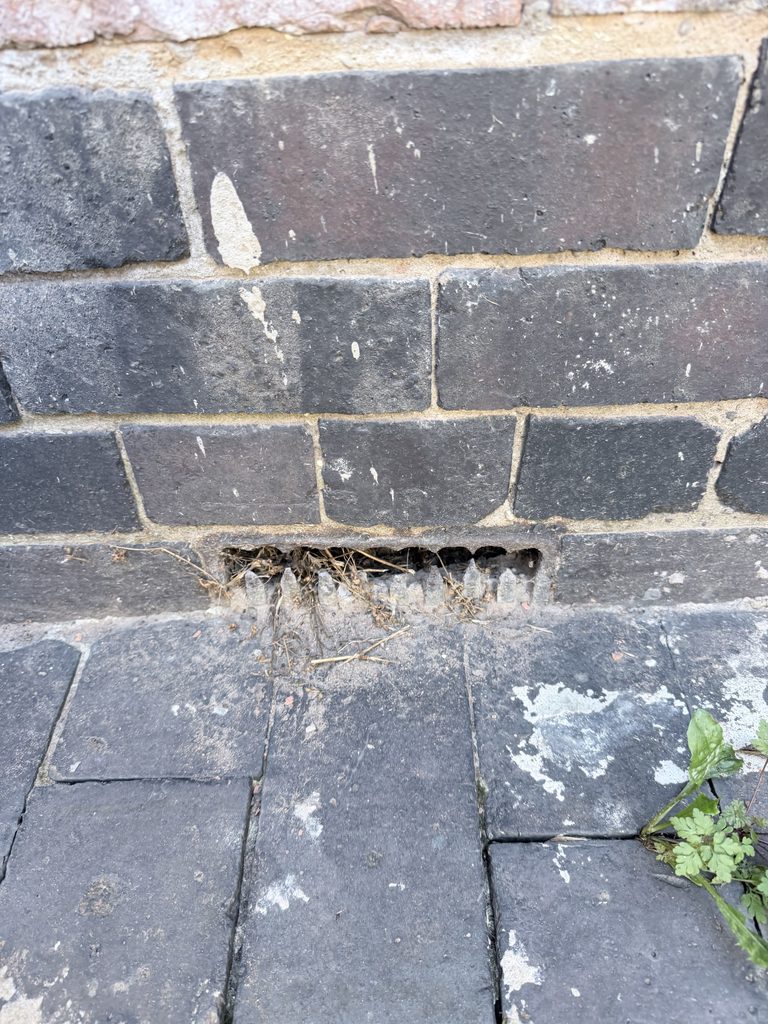
Rats are capable of exploiting surprisingly small gaps and defects.
Potential entry routes can include:
- Damaged or displaced drainage
- Defective gullies
- Open or poorly protected drainage connections
- Gaps around pipes and service penetrations
- Damaged brickwork
- Voids beneath floors
- Gaps around doors
- Defective external structures
- Cavities and concealed building voids
- Openings created by deterioration or previous building work
This is why simply treating the location where rats have been observed may not address the reason they are able to access the building.
Rats and drainage
This is particularly important to Rattraxs.
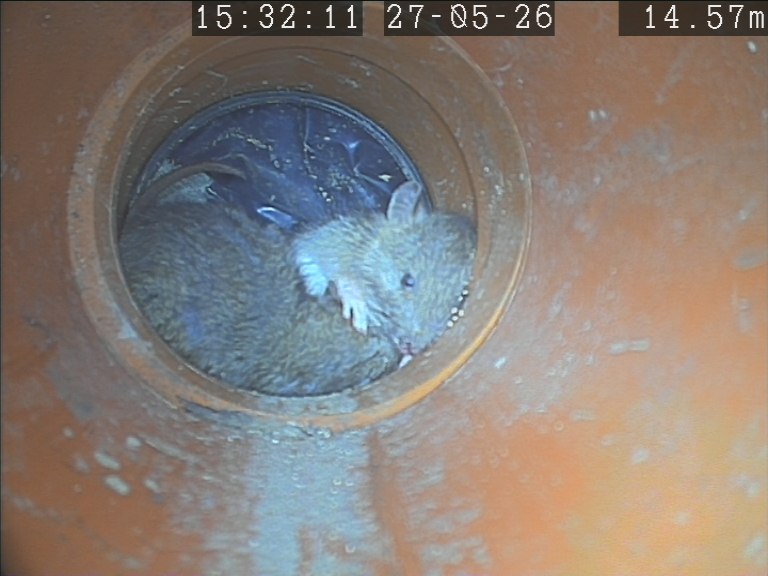
Drainage systems can provide rats with concealed routes through the built environment. Where defects or inappropriate connections exist, the relationship between drainage infrastructure and a building may become particularly relevant to an investigation.
Signs that warrant consideration of a drainage connection can include repeated internal activity, activity around inspection chambers or gullies, unexplained access points, persistent problems following treatment, or other evidence suggesting movement between the drainage system and the property.
A CCTV drainage survey can sometimes provide evidence that cannot be established through surface inspection alone.
Rat behaviour inside buildings
Once inside a building, rats may exploit voids and concealed areas rather than remaining in obvious locations.
Depending on the circumstances, activity may occur within:
- Floor voids
- Wall cavities
- Roof and loft spaces
- Service voids
- Sub-floor areas
- Extensions
- Outbuildings
- Areas beneath kitchens and utility rooms
Noises, droppings, gnawing, grease marks, damage and sightings can all provide useful information — but individual signs need to be interpreted within the wider circumstances of the property.
Rats are creatures of opportunity
Rats do not necessarily need a property to provide everything they require.
A building may provide shelter while nearby gardens, drains, waste areas, agricultural land or neighbouring properties provide food or other resources.
This is one reason why a rat investigation should consider the wider environment, rather than looking at the building in isolation.
Following the evidence
This is where the Rattraxs approach becomes particularly relevant.
Rather than assuming that the point where a rat has been seen is the source of the problem, an investigation can consider:
Where has activity been observed?
What routes could connect those locations?
Where could the rats be entering?
Is there evidence of movement through the building?
Could drainage be involved?
Are there structural defects or access points?
What does the physical evidence tell us?
Depending on the circumstances, this may involve visual inspection, tracking and monitoring, specialist tracing methods, thermal imaging, CCTV drainage investigation and photographic evidence.
The objective isn’t to use technology for its own sake.
The equipment supports the investigation. It does not replace it.
Finding out how
A rat infestation is sometimes treated as simply a pest-control problem.
But persistent or unusual activity can sometimes indicate a wider issue involving drainage, building defects, environmental conditions or access routes.
That’s why understanding rat behaviour matters.
The more accurately the movement and access route can be established, the better the opportunity to identify the circumstances allowing the activity to continue.